Thursday, March 27

Salad

Salad is so in vogue nowadays that it seems to have been created recently, but in fact the Greeks and Romans already appreciated it. The word salad comes from the Latin salāta, which means "having been salted". The first thing that comes to mind when we hear the word salad is the green one (made with raw leaf vegetables seasoned with vinaigrette), but there are many different kinds of salads. They can be made with other vegetables, tubercles, grains, noodles and fruits.
Despite being very good for our health raw leaves salad still has its enemies. Among those enemies there are a lot of kids, some men and older people that came from countries where eating salad wasn’t a habit. My mom told me that her older relatives that came from Poland refused to eat salad, saying that raw green leaves were cow’s food and probably bad for humans. The problem with kids is that they simply don’t trust anything green and find this kind of food bitter and unpleasant. The men who usually don’t like salad say it’s a girly, not fulfilling food.
I believe people who don’t like salad never tasted a good one. A well-done salad, made with fresh leaves and ingredients that complement each other and add different textures and flavors, seasoned with a good dressing, would be appreciated by anybody. It’s not so hard…you add cheese and conquer some kids, with some cooked vegetables you might make up your grandfather’s mind, finally a little bacon and your salad is not so girly anymore!
Some salads have the ingredients so well combined that became famous worldwide, like: Caesar Salad, Coleslaw, Cobb salad, Greek Salad, Panzanella, Niçoise, Waldorf, Tabuleh.
This one at the picture I made with mixed greens, artichokes, pupunha palm heart and edible flowers.

Tuesday, March 25

Seafood

To be able to spend some time at the beach, cooking and eating fresh seafood is a blessing. And luckily that was what I did last weekend. Arriving at the beach we stopped at the fishermen stands and bought the food provisions for the next days. That only is already a fun thing to do. There were so many options: squid, octopus, fishes, crabs, clams, mussels, shrimps and so on. My dog was exited too and when I got distracted I founded her liking the fish tails that were hanging out of the iced recipients, so she had to wait in the car. But it wasn’t for long, I knew what I wanted: sea bass, one of my favorite fishes, octopus, clams and very big shrimps. For the first meal I was doing something light: grilled shrimp with fresh herbs, ginger and oyster sauce to be served with a salad. What I love about seafood is that you can make a meal that is very tasteful, light and healthy at the same time. But some people aren’t so thrilled about some kinds of seafood, like shrimp, as they worry about its fat and cholesterol contents. So I decided to do some research and show you the facts before writing down my delicious shrimp recipe…
Shrimp is a good source of protein (23.7 gram in 4oz), very low in calories (112) and in total fat (less than 1 gram), but it really has high cholesterol (172 milligrams in 4 ounces). In the other hand, this is less than the cholesterol found in the same quantity of egg. And shrimps have omega-3 fatty acids, noted for their anti-inflammatory effects and ability to prevent the formation of blood clots. Plus shrimp is an excellent source of selenium, vitamin D and vitamin B12. Vitamin B12 is one of the nutrients needed to keep low the levels of homocysteine, a molecule that can directly damage blood vessel walls and is considered a significant risk factor for cardiovascular disease.
So, from what I read I conclude that people who don’t have health problems can eat as much shrimp as they want and people who have cholesterol problems but are allowed by their doctors to eat egg can (and should) sometimes substitute it for shrimp. For more information check those articles:
Shrimp
CNN

Grilled Shrimps, Asian style:

6 very large shrimps, deveined in shell
1 red chili pepper, minced
1 clove of garlic, minced
Zest of 1 lime
2 inches of ginger grated
2 tablespoon of oyster sauce
2 tablespoon of cilantro minced
Salt to taste
Olive oil, for brushing

Mix all the ingredients, but salt and olive oil. Season shrimps meat with salt, spread the mix of spices on the shrimp’s meat. Let it marinating for 15 minutes. Preheat griddle or grill pan over high heat. Brush shrimps with oil and grill about 2 minutes on each side, until shells are hot pink and shrimp is opaque.

Wednesday, March 19

Fine chocolate

Easter is coming and all I can think is chocolate! I don’t care about the shape, I don’t need a chocolate egg or rabbit; I prefer a simple bar of fine plain chocolate. I know I can have it anytime, but never I feel so much desire for it as I do at this time of the year. First of all I’m an addict and then there’s too much information all over the place, that isn’t fare. Thank God I refined my palate and don’t go crazy on any chocolate I see. Although I sometimes eat some generic stuff and find pleasure and satisfaction in doing it. But sampling some of the best products in the world is a totally different experience. It’s about opening up your senses, discovering new subtle tastes, letting your imagination wander with flavors and go to places like Madagascar, Ecuador and Caribbean and having your whole body feeling amazed by the result of the dedication of people who strive for perfection.
A great chocolate starts with the best cocoa beans. There are three main varieties of cacao: Forastero that comprises 95% of the world production of cacao, Criollo, and Trinitario. The highest quality cocoa beans come from the Criollo variety, which is considered a delicacy. Criollo plantations have low yields and tend to be less resistant to several diseases that attack the cocoa plant; therefore very few countries still produce it. One of the largest producers of Criollo beans is Venezuela and the most famous region is Chuao. Chuao is surrounded by mountains and dense rainforests to the south and by the Caribbean Sea to the north, resulting in a perfect microclimate for cacao. And with that Chuao also has centuries-old traditions of harvesting and preparing cacao.
The beans then have to go to the chocolate makers where they are cleaned, roasted, and graded. Next the shells are removed to extract the nib. Finally, the nibs are ground, which releases and melts the cocoa butter producing chocolate liquor. Chocolate liquor is blended with the cocoa butter in varying quantities to make different types of chocolate or covertures. The finest, plain dark chocolate covertures contain at least 70% cocoa (solids + butter), whereas milk chocolate usually contains up to 50%. High-quality white chocolate covertures contain only about 33% cocoa. Then it’s time to take care of the texture of the chocolate by conching and tempering it. The conching process produces cocoa and sugar particles smaller than the tongue can detect, hence the smooth feel in the mouth. The length of the conching process determines the final smoothness and quality of the chocolate. High-quality chocolate is conched for about 72 hours, lesser grades about four to six hours. The final process, which is tempering gives chocolate its uniform sheen and crisp bite.
So which one is the best chocolate? I tasted and liked: Valhona, Michel Cluizel, Voges, Lindt, Scharffen Berger, Callebaut, Neuhaus and Galler. But the list of good chocolate is long and last time I checked everyone was talking about Amadei as being the greatest one. Amadei is produced in Italy with cocoa beans that come from Chuao in Venezuela and a great deal of dedication. For more info about it read this Article.

Also check out those chocolate sites:
70%
Chocosphere
World Wide Chocolate

Thursday, March 6

Farofa

This week I had guests from abroad and decided to serve them a Brazilian dish called “farofa”. A lot of Brazilian dishes are inherited from the colonizers (the Portuguese) and from the African slaves. We also have an international cuisine that came with the immigrants (from Italy, Japan, Germany, etc). But I’m found of foods that are ultimately Brazilian and have indigenous ingredients, like our “farofa”! I’m very curious about the indigenous culture and care about its preservation. Maybe there’s something genetic about it, since I’m probably related to the famous Villas Boas brothers.
In 1943 the Villas Boas brothers led the expedition known as ‘Brazil’s march to the West’, which was intended to explore the interior of the country for colonization. They discovered the Xingu indigenous tribes in the middle of the jungle and were overwhelmed by them cultural richness. The expedition left but the brothers stayed to protect the indians from the land speculators, diamond prospectors, skin hunters, and rubber gatherers who had followed in their wake. In1961 they succeeded in getting the entire upper Xingu legally protected. Xingu is Brazil's most successful Indian reservation, a 10,800-square-mile sprawl of pristine rainforest, in the state of Mato Grosso, where 14 Indian tribes live. But today, the park is surrounded by fields and pasture in the center of Brazil's fastest developing agricultural region, and the Indians, whose numbers have nearly doubled to about 5,000 since 1961, say they are feeling the pressure. The indian population in Brazil decreased by more than 90% since the country’s discovery and with that a big part of our nature, and the destructive progress is still going on.(For more info check this out: Disinherited).
So, at least let spread the word and get people interested in their culture through culinary curiosities. Like in this case, where my guests really appreciated my “farofa” recipe and were happy to learn more about it. I told them that this dish could only exist because the Brazilian Indians knew how to use the bitter variety manioc, which is poisonous when raw, detoxifying it and transforming it into flour, the basic ingredient of “farofa”. That was learned, then spread out, by the Portuguese when they came to Brazil and found out that the weather was unsuitable for several crops they were use to eat so they were forced to develop new eating habits based on the food that was availiable in the country and used by the Indians.
Today manioc is widely used in every region of Brazil, as much as the most popular dish made with it: Farofa. There are many different recipes of it, depending on family and region traditions. It’s a side dish that goes well with almost everything: meat, fish, pork, chicken and feijoada. At home I do this delicious and simple recipe to be served with roasted chicken and amuse foreigners!

Farofa(Serves 4)

Ingredients:
3 tablespoon of butter
1 small onion, sliced
1 egg
1 cup toasted manioc flour (you can also toast the uncooked flour in the pan, low heat, stirring constantly until slightly golden)
1 tablespoons fresh parsley, minced
2 tablespoons olives, sliced (I prefer green, but sometimes I use black)
salt and pepper to taste

Sauté onion in butter until soft, but not browned. Reduce heat and add egg, stirring until scrambled and well mixed. Gradually add manioc flour, mix to incorporate. Stir in olives and parsley. Season to taste and serve.

Wednesday, February 27

Chicken soup

One more post about soup and I’m done. It’s enough, I know, but this last one is important so the soup trilogy will be completed.
In Brazil chicken soup is called “canja de galinha”. Besides the soup we also say something is “canja de galinha” when it is very easy to do. Ok, it’s easy, but a chicken soup has to be well done to be flavorful, light, fulfilling and restorative at the same time. The soup is commonly used to help people overcome colds and digestive problems. I always make myself a chicken soup when I’m not feeling very well and many times I woke up cured next morning. Of course chicken soup is a comfort food and we know they can make us feel better, but it is more than that…
According to food historians chicken soup was prescribed as a cure for the common cold in Ancient Egypt. Avicenna, the Persian physician who is considered by many the father of the modern medicine, referred to the curative powers of chicken soup in his writings and strongly recommended it as did the rabbi and Jewish doctor, Maimonides. Today, researches of the University of Nebraska suggest that there might be some scientific basis for the belief in the curative powers of chicken soup. The blend of nutrients and vitamins in traditional chicken soup can slow the activity of certain white blood cells, possibly producing an anti-inflammatory effect that can ease the symptoms of the illness. Also the simple fact that the soup is nutritious and easy to digest makes it very valuable for the convalescents, as they don’t have to spare more energy than necessary on digestion saving it to fight the disease. Some say that sipping warm soup can also clear the sinuses because of the steam ventilating into the nasal passages, serving as a natural decongestant which also relieves cold and flu symptoms.
When I do mine I don’t measure anything so no soup is like other and it’s impossible to write a recipe. But the ingredients are mostly the same every time: olive oil, chicken legs and thighs, carrots + celery + tomato + onion (all diced) garlic + ginger + scallion + cilantro + parsley (all minced). And what I do is sauté the chicken in the olive oil, add all the other ingredients but the herbs, sauté for a couple of minutes, add boiling water and let it cook until the chicken is cooked and falling apart from the bones. Then I add the fresh herbs, take the chicken out, shred the meat, put the pieces back in the soup and serve it very hot.

Friday, February 22

Famous Soups

The world is full of delicious soups, here are some information about eleven of them:

Bisque: Is made with shellfish, white wine, Cognac and enriched with cream. The word suggests a connection with the Spanish province of Vizscaya, which lends its name to the Bay of Biscay. But today the word is used imprecisely for several pink puréed soups.

Borsch: It’s a beet soup eaten hot or cold, popular in Ukraine, Russia and Poland and also an Ashkenazi Jewish dish. It’s traditionally served with sour cream.

Caldo Verde: Is a popular soup of Portuguese cuisine. The basic ingredients are potatoes, kale or collard greens, onions and garlic. Before serving, slices of Chorizo (a smoked pork sausage seasoned with paprika, crushed pepper, garlic and other spices) are also often added as well as olive oil. It is usually accompanied by slices of Broa (Portuguese bread made of a mixture of cornmeal and rye flour, and leavened with Yeast) on the side.

Chowder: Is enriched with pork fat and thickened with flour. Associated to the cuisine of New England, it can have different base ingredients, but the most famous is the clam chowder. It’s done with milk or cream in most places but in Manhattan it has tomatoes. Its name probably comes from the French word chaudière that means pan.

Chupe de camarones (shrimp): This a Peruvian dish that in fact stands between a soup and a stew. The preparation has, besides shrimp and its stock, onion, garlic, chillies, tomatoes, rice, potatoes, corn, egg, fish filets and cilantro, so it’s quite fullfilling.

Gazpacho: The Spanish soup is originally a labourers’ dish from Seville, made with bread and vegetables including cucumber, tomatoes, onion, bell pepper, seasoned with garlic, olive oil and vinegar. It’s served ice cold and commonly with garnishes, such croutons, chopped cucumbers, hard-boiled egg and bell pepper. Its name, of Arabic origin, means soaked bread.

Matzo Balls Soup: Mazto balls are traditional jewish dumplings made from matzo meal, eggs and some sort of fat or oil. Some recipes may add a number of ingredients, such as stock and seasonings (for taste), seltzer or baking powder (for fluffiness). Traditionally, the fat used had been Schmaltz (chicken fat), which imparts a distinctive flavor, but it can be replaced by vegetable oil. The balls are shaped by hand and dropped into a pot of salted, boiling water or Chicken soup.

Minestrone: An Italian mixed vegetable soup containing pasta or rice. It is characterized by the variety of vegetables it contains, which vary from region to region. Minestrone originally was a very humble dish and was intended for everyday consumption, being filling and cheap, and would likely have been the main course of a meal. The word means a very substantial or large soup.

Miso Soup: A traditional Japanese Soup, consisting of a stock called Dashi into which is mixed softened Miso paste. Although the suspension of miso paste into dashi is the only characteristic that actually defines miso soup, many other ingredients are added depending on regional and seasonal recipes as well as personal preference.

Vichyssoise: A leek and potato soup thickened with cream and served cold, garnished with chives. The soup was created in the US by Louis Diat, a French chef who named it after his local town, Vichy.

Vietamese Pho: A beef noodle soup with a rich, clear broth achieved from hours upon hours of boiling meat and different herbs. There are many varieties of pho, with different selections of meats (most commonly beef and chicken) along with beef balls. Pho is typically served in bowls with spring onion, slices of semi cooked beef (to be cooked by the boiling hot broth), and then of course the broth itself. The use of vegetables and various herbs is common in the southern region.

Thursday, February 21

“S” for Soup


Tomato soup
Originally uploaded by PaulaVB

The simple task of spelling a word and associate the letters to other words so the person who is listening can understand them, despite their sound similarities, is hard for me to do. I know there are certain codes and common sense uses, but I keep living in my own world and saying the first thing that comes to my mind. Often this thing is related to food. So I go on in life saying things like “b for broccolis and c for chicken”. I can feel the awkwardness from the other side, so I try to explain myself saying “oh, you know, I’m a chef” or “it’s almost lunch time and I’m getting really hungry”. Last time when I said “s for soup” I justified myself saying "Jewish Passover is coming and I’m already thinking about the matzo ball soup" (What?)! It’s embarrassing… I know… and the other person has nothing to do with it, but my justifications are true; in this case I was really thinking about soup and that’s why I also decided to write about it…
Did you know that the first Parisians restaurants didn’t serve food, only soup? It was believed that soup could raise the spirits and bring relief to respiratory indisposition. So going to restaurants was considered a restoring act; therefore its name.
Carême, who grew up at a time where the soup was the healthful food in vogue, affirmed that all meals would have to start obligatorily with it. For him, this was an issue of philosophy and medicine as well as it was of gastronomy. In his opinion soup was meant to renew the palate and to prepare the spirits of the dinners for the rest of the meal. Nowadays soups are not as important as they were. Sometimes they are even diminished and associated with illness and diet. Nonsense, when well done a soup can be delightful! Basically, they can be classified in two groups: clear (as consommé) and thick, that are subdivided according to the type of thickening used:
Puree soups: vegetables soups thickened with the starch contained in the pureed vegetables.
Bisques: made with shellfish and usually enriched with cream.
Cream soups: thickened with béchamel sauce or roux, enriched with cream and/or milk.
Velouté soups: thickened with egg yolks, butter and cream.
In addition to these, there are soups thickened with arrowroot, rice and tapioca. And I’ll continue to write about soup… So maybe I can take it out of my system and say something like “s for sierra” next time I have to spell a word!

Tuesday, February 19

Cereal Killer

I bought a box of chocolate cereal and it didn’t taste good; I wanted chocolate but instead I got fibers. Sometimes I miss being in the US for the multiple choices, in this case of cereals! When it comes to breakfast cereals I can relate to Jerry Seinfeld; I love them and care for diversity! I enjoyed going to the market to find shelves packed with all kinds of cereals... One day I could go healthy with honey, dried fruits and fibers; other times I could go indulgently with loads of sugar, chocolate, marshmallow … and nuts with so many options! (Check out this list of breakfast cereals!) But here in Brazil, besides not having many choices, now they’re screwing up with the few cereal boxes we have. I read that the current trend is to make cereal healthier by reducing the amount of sugar and adding whole grains. Thanks a lot cereal killers! I know it was first invented so people could have a healthier first meal but they started adding sugar, chocolate, other flavorings and cereal became also a treat we love. Now they can’t take that away from us! Check out the history of breakfast cereal and see how things evolved…
The American breakfast was composed of eggs, bacon, sausage and beef, with very little fiber. As a result, many people suffered painful and debilitating gastrointestinal disorders. That was the incentive to invent some kind of breakfast cereal. The first who did it (in 1863) was James Caleb Jackson, operator of the Jackson Sanitorium in Dansville, New York. His heavy bran nuggets that needed soaking overnight before they were tender enough to eat, called Granula, never became popular. The next generation of breakfast cereals was considerably more convenient, and, combined with clever marketing, they finally managed to catch on. In 1877, John Harvey Kellogg the operator of the Battle Creek Sanitarium, in Michigan, invented a ground up, oat and corn meal biscuit for his patients suffering from bowel problems. The product was initially also named Granula, but changed to Granola after a lawsuit. His most famous contribution, however, was an accident. After leaving a batch of boiled wheat soaking overnight and rolling it out, Kellogg had created wheat flakes. His brother Will Kellogg later invented Corn flakes from a similar method, bought out his brother's share in their business, and went on to found the Kellogg Company in 1906.
A patient at the Battle Creek Sanitarium, Charles William Post, also made contributions to breakfast cereals. After his 1893 visit, he started his own sanitarium and developed his own coffee substitute, Postum. In 1897, Post invented Grape Nuts and, coupled with a nation-wide advertising campaign, became a leader in the cereal business.
By the 1930s, the first puffed cereal, Kix was on the market. Soon shredding was introduced, yielding Shredded Wheat. Starting after World War II the big breakfast cereal companies increasingly started to target children. Sugar was added, and the once-healthy breakfasts looked very different from their fiber-rich ancestors… but so delicious!

Monday, February 18

Skewers

Skewers or "brochettes" in French and "espetinhos" in Portuguese always look good and are fun to eat. You can make them with vegetables, meet, chicken, seafood, hard cheese and fruits to be served as hors d’ouvre, appetizer, entrée, side dish or dessert. Everybody likes them and I even have seen kids eat and enjoy vegetables when they are presented like that. Another pro is that they are always easy to do. The important thing is to get the seasonings right when marinating before grilling and have a good sauce to serve the food with. For a complete meal on skewers I’d start with grilled broccolis, cauliflower, mushrooms and hard cheese, served with this sauce:

Asian sauce
· 1/2 cup mirim
· 1/2 cup sake
· 1/2 cup soy
· 1 tablespoon oyster sauce
· 1 tablespoon sugar
· 1 piece of ginger minced
· 3 scallions chopped

Combine all ingredients but scallions in a saucepan. Heat to a boil, and then reduce heat to a simmer. Cook about 20 minutes, stirring occasionally until the sauce is reduced by half and has a thick consistency. Add the scallions and serve.

For main course I suggest another skewer that people love when I do, which is a grilled shrimp marinated with olive oil, garlic, lemon zest and herbs like thyme, rosemary and parsley.
For dessert get inspired by the Swiss fondue and have fruits served with different popular sauces like chocolate and caramel.

Sunday, February 10

Cooking to impress

Valentine's Day is coming! On this day lovers express their feelings for each other sending greeting cards, giving candies and flowers, going out for dinner… And should definitely consider the option of cooking a great meal.
In the past young women needed to know how to cook and do other home tasks in order to find a good husband. That’s passé, but at the same time people are getting more and more passionate about food, so I wonder… Does the expression we have here in Brazil ‘grabbed by the stomach’ make sense nowadays? Is it still possible to make someone fall in love with you for your cooking? I believe so… Although, let’s make it clear, that’s not the reason why I went to cooking school! Women are not obligated to cook for their family anymore, but anyone who could have someone preparing delicious healthier food at home would definitely appreciate it, right? That’s why knowing how to cook became an extra quality that can make an extra good impression. And I can prove it with this true story!
I had a friend who was a very good student, got a great job and was building a beautiful career. Besides that she was learning 3 languages and spending a lot of time at the gym trying to stay fit. The last thing she thought about was food. Until the day she met a nice guy who loved to eat. They were dating for a couple of years and besides not sharing the passion for food everything else was fine. But she was in love and wanted more. The plan was to throw a dinner party for his birthday and surprise him and his friends with her cooking. The only problem: she couldn’t cook. That’s when I got involved. I did everything; planned the menu, bought the ingredients, cooked, set the table and taught her how to finish the dishes and plate them. I left just before the boyfriend and guests arrived, so she could say she did everything by herself. I was a personal ghost chef! On the following morning she called me saying everything went out great, the guests said they had never eaten so well and the boyfriend was happy, grateful and head over heels in love. Two weeks later I saw her at the gym and she came towards me, euphoric, showing her hands…yes, yes, yes!!!! She was engaged!

Thursday, February 7

Chinese food

Some people say that Chinese cuisine is one of the 3 most important in the world, after French and Italian. Those cuisines founded the bases for the culinary arts we know today. It’s a shame that a lot of people wont believe it because they only had bad Chinese (usually fast) food. But things are changing, people are getting more interested in this cuisine, there are better Chinese restaurants opening everywhere and various good cookbooks about it.
Last year I learned a little more about it by taking an Asian cuisine course at CIA. On the first day of class we found very weird that our teacher was a big German guy! Soon we knew we couldn’t have a better teacher. He lived many years in China, married a Chinese girl, speaks Chinese, loves the food and knows everything about it. We learned that vegetables, noodles (made of wheat and rice) and pork are very common ingredients. Soy sauce, scallions, garlic, ginger and chilies are the basics seasonings and appear in many recipes. They also use several dried products such as: mushrooms, shrimp, scallops, oysters, bird’s nest and shark’s fin. The Chinese style of cooking is based on the philosophy of balancing yin and yang... harmony arises from the proper blend of opposites. Beautiful! Most Chinese dishes are based on five traditional flavors: sweet, salty, bitter, sour and hot. And ingredients are paired to achieve rounder, more complex flavors. The meals are nutritiously well balanced: they have protein, carbohydrates and vegetables. They use their unique technique of stir-frying and the sensational Wok pan. There are four major Chinese cuisines: Beijing (Peking) in the Northern region, Shanghai (Eastern), Cantonese (Southern) and Szechwan (Western). In the Northern region (Beijing) the staple is wheat flour. They use wine stock and their cooking includes pungent sweet and sour dishes as well as subtler, delicately seasoned foods. In the eastern region (Shanghai) wheat flour is replaced by rice as a staple. They use more soy sauce and sugar. Vegetables are abundant and celebrated dishes include bird’s nest soup and a wide range of seafood. Southern (Cantonese) cooking is subtle and the least greasy of all. They do a lot of stir-frying and the familiar dishes of this region are dim sum. Western (Szechwan) is known for its fragrant peppercorns called fagara (or Szechwan pepper) and the characteristics of the food are its vigor and zest.
The recipe I'm writing down is one of the first we did in class. It's good and so simple... you should try! The only problem is that I don’t remember from which region it comes from... Would you guess?

Egg Fried Rice (for 2)

Ingredients:
2 Eggs
½ tsp salt
1 tsp soy sauce
2 tbsp peanut or vegetable oil
2 oz lean bacon, finely chopped
2 scallions, finely chopped
1 oz carrots, finally chopped
25oz long-grain rice, cooked and cooled

In a small bowl, whisk the eggs, salt and soy sauce. Heat a wok over high heat. Add the oil, scallions and carrots. Stir-fry for 30 seconds. Add the egg mixture, cook for 30 seconds, mixing with a spatula and breaking the egg up, like when doing omelet. Add the bacon and the rice, mixing aggressively to break up the rice into the eggs. Stir-fry for 3 minutes, turn the rice into the plates and serve.

Saturday, February 2

Happy New Chinese Year!

Chinese New Year is approaching. Its specific date changes each year, as it falls on the first day of the lunar calendar (which is the first day of the new year containing a new moon). In 2008, that will be on February 7th and this is the year of the Rat. New year ends on the Lantern Festival, fourteen days later.
According to legend, in Ancient China, Nian was a man-eating beast, which came out every 12 months somewhere close to winter to prey on humans. The people later believed that the Nian was sensitive to loud noises and the colour red. These customs led to the New Year celebrations. And In fact, Nian means "year" in modern Chinese.
As in Western countries, New Year is a time to receive guests and food plays an important role. Most of the dishes are prepared for their symbolism and to bring good luck to the assembled guests. There may be a multitude of dishes prepared for Chinese New Year's dinner. Custom dictates that someone should serve as many dishes as there are guests. I like this idea! Offering sweets, for example, is a way of expressing a wish for a sweet life and a year without troubles. Nian gao, a sticky rice cake steamed in lotus leaves, evokes a successful career and prosperity down the road. The dumplings, known as “jiaozi” in chinese represent the progression of the years. They are filled, then boiled or steamed. The dumplings can contain a piece of sugar, a coin, a peanut or a chestnut, each signifying a different omen. Did you just bite into a sweet dumpling? Happiness will be knocking at your door. Did it contain a coin? Luck will smile on you. Is it stuffed with a chestnut? You'll soon have a boy. Is it filled with peanuts? That's a sign of longevity... and I feel like eating all those dumplings!

Monday, January 28

Fruit Salad

That’s the picture of the breakfast party I did. The table is just been set up and the delicious, good-looking fruit salad already gets the photographer attention. So let’s talk about it! Fruit salad consists of pieces of sliced, shopped or whole small fruits, pitted and peeled if necessary. Traditionally syrup was used to coat the fruits but it can also be served unsweetened, moistened with fruit juice. In some recipes alcohol is added, usually a sweet wine or liquor. Fruit salads are in almost all hotel breakfasts all over the world. I had it at 5 stars to 0 stars hotel either in Brazil, US, Europe or Cuba! As a dessert you can find them in many restaurants (but not in the fancy ones) as a healthier option, although usually they are made with sugar (which is weird and hard to understand). They are also sold as a snack in many places, including convenience stores and gyms. People also do it a lot at home, as an easy and cheap option of dessert. Wrapping it up fruit salads are not seen as a real dessert and people don’t expect much of it, right? But I disagree, is not that I want to make it fancy, I just think a fruit salad can be surprisingly good. There are a number of recipes for it that contain different kinds of fruit and other ingredients to make the syrup, or even different kind of sauces. Run away from the papaya, banana, orange and apple mixture, we had enough of it! There are so many options of flavors, texture and color so you can be very creative and come up with a delicious recipe! You just have to choose great ingredients that go well together. For my fruit salad I only use the best fuits I can find, the ones that are in season and are more classy, like peaches, raspberries, strawberries, plums, cherries, mangos and lichees. As the syrup goes I like to add some flavorings as vanilla bean, cinnamon, star anise and lemon zest. Just by using great fruits and a flavorful syrup I end up making a surprisingly good fruit salad! If you need more inspiration check out those sites with many recipes: Fruit Salad Recipes and Cooks Recipes

Thursday, January 17

Açaí

I was busy preparing a breakfast party for 120 people and couldn't write for a while. But now I'm back and writing about this kind of berry we have in Brazil called açaí. Açaí is very popular in the north of Brazil and it’s becoming more popular throughout the country and abroad. As I mentioned on my last post it's been called a superfruit, because of its antioxidant power. The açaí palm is native to tropical Central and South America, from Belize south to Brazil and Peru, growing mainly in floodplains and swamps. The fruit is small, round, black-purple, about 1 inch in diameter, similar in appearance and size to a grape but with less pulp.
I decided to add it to my breakfast menu and it was a hit! I did what we call açaí na tigela, (açaí in a bowl) which is a smoothie made of the frozen pulp mixed with honey and banana, served with granola (400g of the fruit, 2 bananas and honey to taste). This preparation is very caloric and highly energetic, being a practical and effective food to eat in the morning on a busy day, but also very scary for the girls that want to be skinny. The flavor is very different and people would love it or hate it, and you have to try at least 3 times to get used to the taste and begin to like it. That's what happened to me and to a lot of people in that party! For more info on this exotic fruit go to http://en.wikipedia.org/wiki/Acai.

Friday, January 4

Food trends 2008

Happy New Year! And with a new year starting we begin to think about what the future holds for us. We worry on how the economy will be and how the stock markets will behave, who’s going to win the elections, what’s going to happen with the weather and the global warming… But we also would like to know how numerology sees the year of 2008, where the planets are and how they are going to affect us, what we can expect for the rat year… And who doesn’t want to listen about what’s going to be in and out in the fashion world and, of course, what are the food trends! Here is what I’ve heard and read:

Organic foods, sustainability, wind- and solar-powered farming, fair-trade foods, locally grown foods, knowing where your food originates and how it was produced continue to grow in popularity among consumers.

Consumers now also want to know the specific varieties of ingredients and breeds of animals there were produced with.

Small portions of food, wine, or other alcoholic beverages, and plates that can be shared around the table will continue to be popular.

Repeated recalls of meat and produce have drawn attention to the sluggish and outdated American food-safety system, and the government has faced mounting calls for an overhaul. Expect food companies to be as nimble, touting new and increased safety measures.

A growing variety of alternative natural sweeteners, from honey-like agave syrup, erythritol to ultrasweet stevia, are crowding grocers' shelves. And artificial sweeteners are on the "out" list.

Maybe less people will drink bottled water, as it is seen by activists as a major source of environmental overload. But at the same time we will see more of functional waters (those with added nutrients), flavored water and also flavored ice cubes.

Shoppers want, and are getting, bolder flavors, more spices, stronger cheeses, and more crisp and crunchy textures - all subtle changes in taste attributed to the dulled taste buds of an aging population.

Latin flavors are the next thing and Asian influences are still in, special attention to the light flavors like fish, oyster and plum sauces. On the other hand Wasabi is on its way out. Indian, Indian-fusion and Japanese fare are moving toward the mainstream, while the adventurous are trying Korean and African foods. And Olympic hype from Beijing is sure to boost cravings for Chinese food.

There will be more products containing Probiotics, the friendly bacteria that keep us healthy are moving beyond yogurt to a wider range of foods, even chocolate bars.

Fruits, vegetables, salads, grains, specially ancient grains like quinoa, nuts, and yogurt are part of a trend toward naturally good-for-you foods.

We will see more of less familiar cuts and animal parts, nose to tail, turn up on menus.

Tours and trips planned around food experiences, a country's cuisine or cooking lessons - once just for dedicated foodies - are attracting ordinary vacationers.

Kids' cooking classes are cropping up across the country, and we're seeing more prepacked kids' foods in stores and cook books for them.

Expect to see more ready-to-eat or easy-use food products, such as salad mixes, sauces, prepackaged dinners, and pie crusts. That reflects a desire for home cooking with a little less hassle.

The premium food market is expected to grow by 30% to $94 billion in 2008. Gourmet tuna, cheeses, teas, wine-flavored crackers, and cocktail products are in that category.

The vegetarian trend will continue to grow.

Look for high-nutrient "super fruits" to go mainstream. Mangosteen, a high-antioxidant fruit from Southeast Asia, is making waves. Subtly sweet and a bit tangy, mangosteen is set to show up in juices along with goji berries, acai and more pomegranate. But the yumberry (picture)may edge out the competition. The subtropical fruit, originally from China, has a high antioxidant content and cranberry-like flavor.

More restaurants will accept take out orders via text messaging, and more people are going to place orders and pay by cell phone while en route to pick up food from a take-out, a supermarket or a neighborhood restaurant.

More specialized and niche restaurants and stores will open, like dessert bars, rice pudding shops, cevicherias and noodle bars run by chefs.

Though we may be more interested in food and dining than ever before, recent trends suggest we're all getting a little tired of over-the-top fine dining. We will see fewer really upscale restaurants and more neighborhood bistro-style businesses.

Wednesday, December 26

Merry Christmas!!!

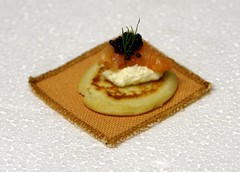
I'm not Catholic and don’t celebrate Christmas, but in Brazil there are an estimated 137 million Catholics(which is the highest number of any country in the world), representing 74% of the Brazilian population, so the pressure is big! At this time of the year everybody is happy, shopping and partying, so it’s normal to feel like doing some (or all) of those things! Also the family is getting bigger and some people are marrying outside of the religion, so this year we end up doing a Christmas tree at my cousin’s house and a small dinner at home. But I was working hard, doing parties for other people, and didn’t have much time left to prepare our own meal, so I end up doing a table full of appetizers. We had mostly cold food and drank Champagne; it was very good and appropriate for a very hot night. In the menu were: Big mixed salad greens with balsamic vinaigrette, Paris mushrooms with lemon and fresh herbs vinaigrette, prosciutto with caramelized fresh figs and a dollop of Mascarpone cheese, blinis with smoked salmon, crème fraiche and caviar, bressaola with lemon sauce and arugula, and so on… We had also great cheeses like Brie, Camembert, Cablanca, Fol-Epi and quality breads to eat them with. I know I'm a chef and I'm supposed to cook, but everybody enjoyed it! So if you are having people over for food and don’t have much time to cook try something like that, it works, I recommend it!

Friday, December 21

Bûche de Noël

Bûche de Noël or Yule log is a traditional French dessert served during the Christmas holidays. One popular story behind the creation of this dessert is that Napoleon I of France issued a proclamation requiring households in Paris to keep their chimneys closed during the winter, based on the notion that cold air caused medical problems. This prevented Parisians from being able to use their fireplaces, and, thus, prevented them from engaging in many of the traditions surrounding and involving the hearth in French Christmas tradition. French bakers, according to the theory, invented this dessert as a symbolic replacement around which the family could gather for story-telling and other holiday merriment.
The traditional bûche is made from a Génoise or other sponge cake, generally baked in a large, shallow pan, filled with chocolate cream, rolled to form a cylinder, and frosted on the outside. As the name indicates, the cake is presented and garnished so as to look like a log ready for the fire. Last Christmas I made this one in the picture and hopefully I’ll have some time to do it again soon. I had a lot of fun doing the cake and the decoration plus it turned out so good and pretty that I promised to do it again every year, only changing the flavors. The one I did was a basic genoise filled and covered with a chocolate ganache. The most common combination is a basic yellow sponge cake, frosted and filled with chocolate buttercream, which is ideal to produce a bark-like texture. Many variations on the traditional recipe exist, possibly including chocolate cakes, chestnut cream or any flavored frostings and fillings. These cakes are often decorated with powdered sugar to resemble snow, tree branches, chocolate leaves, fresh berries, and mushrooms made of meringue, very cute! For a good result the most important thing is to get the genóise right, so here it goes the recipe for a perfect one!

Genóise:
5 large eggs
1 1/4 cups sugar
1 cup cake flour, sifted
2 tbsp butter

Preheat the oven to 400F, and line a 10x15 inch jelly-roll pan with parchment paper. Fill a medium saucepan one-third full with water and bring to a simmer. Whisk the eggs and sugar by hand in a bowl of an eletric mixer and place the bowl over the pan of simmering water, whisk constantly until mixture is warm. Transfer to the mixer stand and beat at high speed until the mixture doubled in volume, about 8 minutes. Gently fold in the cake flour. Place the melted butter in a large bowl and stir a scoop of the cake batter into the butter until well combined, then gently fold that mixture into the cake batter. Scrape the batter into the pan and bake it for 7 minutes, until the top is light golden brown. Be carefull to not overbake and end up with a dry cake. Place a wire rack over the cake , invert and cool completely. Make the filling you like and scrape it onto the cake, spreading in an even layer. Roll the cake up tightly and decorate it as you wish.

Wednesday, December 12

Banana

I love bananas, they are the most practical fruit that exist: they come with packaging! They are native to the tropical region of Southeast Asia, the Malay Archipelago, and Australia. Banana is mentioned in Buddhists texts from 600 B and probably was spread throughout the African continent by the Arabs. Then the Portuguese started cultivating it in Central America and Brazil. Today, bananas are cultivated throughout the Tropics in 130 countries and are the forth food product most produced in the world. Besides the fruit you can also use the banana flowers and leaves. The banana flower (also known as banana blossom or banana heart) is used in Southeast Asian, Bengali and India cuisine, either served raw with dips or cooked in soups and curries. The leaves are large, flexible, and waterproof; they are used in many ways, including as umbrellas and to wrap food for cooking, carrying and packing cooked foods. The banana plant has long been a source of fiber for high quality textiles. In Japan, the cultivation of banana for clothing and household use dates back to at least the 13th century. Banana fiber is also used in the production of banana paper.
Unripe or green bananas are basically just water and amid and are the staple starch of many tropical populations. As they ripe the amid turns into sugar giving them the sweet flavor, making they delicious and highly energetic. Bananas have 75% of water and are a good source of vitamin A, B6 and C, fibers, potassium and tryptophan. When consumed this substance increases the serotonin levels in the body, as a natural Prozac! It has been said that eating 2 bananas a day during 3 days increases serotonin in the blood in 16%! Isn’t it great? Eat bananas and be happy! Hey, now I get what happened to me when I was a kid… My older cousin Muti created a game I loved so much people though it was very funny. The game was simply to search for bananas in a tent in the dark and he called it “banana tent”. After finding them I could eat or use the bananas to prepare some dessert. Now I know if it was “apple tent” the effect would be totally different! But thinking about it I realized that in fact this story shows I was born to be a cook and him a great designer!(check it out: Muti´s website)

Banana Walnut Tart:
12 ounces pate sucree
2 pounds bananas
12 ounces walnut frangipane
4 ounces walnut pieces, chopped

Roll dough into a 14 inch disk and line a 10-inch tart pan. Chill for several hours. Peel and slice the bananas, arrange then in a layer in botton of the tart shell. Spread frangipane evenly to cover the bananas. Strew with walnut pieces. Bake at 350 degrees for about 40 minutes, or until set. Cool and serve.

Monday, December 10

Pastel

Pastel is a typical Brazilian snack, consisting of a crisp, thin dough envelope with assorted fillings and deep-fried. It’s primarily sold on the streets fairs, but also in bars and some restaurants as hors-d’oeuvre. It’s very cheap, flavorful and sometimes so big that can replace a meal. Some examples of fillings are minced meet, onions and olives (pastel de carne), just mozzarella, or the Brazilian soft cheese called Catupiry, also popular is the pizza flavor with cheese, tomatoes and oregano. It’s not so common, but you can find pastel with sweet fillings as well. I read that it came from Portugal and descends from the sweet pastries they do there, that they call pastelaria. But I also read it’s a variation on the Chinese deep-fried spring rolls. Maybe is a combination of both, who knows? The only thing I’m sure is that the Brazilian pastel is unique and delicious! The dough’s secret is the addition of a little Cachaça (Brazilian alcoholic drink) that makes it very crispy. I never tested the recipe with other alcoholic drink but I guess you could replace it with Vodka. It’s very easy to make pastel at home, so here it goes the recipe for the dough and you can put the filling you want:

Pastel dough:
2 cups of all purpose flour
1 teaspoon of salt
2 tablespoon of canola oil
1 tablespoon of Cachaça
1 tablespoon of white vinegar
About ½ cup warm water

Mix the flour and salt in a bowl, add the oil, the Cachaça and vinegar, then the water, little by little until the dough is homogeneous and smooth, but not wet. Work the dough in a floured surface as you do with fresh pasta. Let it rest a couple of hours or until next day. Roll out the dough so it’s a little thinner than a pie crust. Cut in the size and shape desired, usually its round or square. Put the filling in the center, fold and press the dough together so it won’t open, like when you do raviolis. Deep-fry the pastel in very hot oil, serve hot.

Sunday, December 9

Jabuticaba

The jabuticaba (also called Brazilian Grape Tree, Jaboticaba) is a fruit-bearing tree native to the Minas Gerais region near Rio de Janeiro in southern Brazil. The fruit averages size is one inch in diameter but can run from 3/4 to 1-1/2 inches, grape-like in appearance and texture but with a thicker, purplish black skin. The gelatinous whitish pulp contains usually one seed and has a pleasant sweet flavor. The skin is high in tannin and has a slight resinous flavor. Common in Brazilian markets, jabuticabas are largely eaten fresh and are very popular. Fresh fruit may begin to ferment 3 to 4 days after harvest, so they are often used to make delicious jams, strong wines, and liqueurs. It is very healthy, several potent antioxidant and anti-inflammatory anti-cancer compounds have been isolated from the fruit and traditionally, an astringent decoction of the sun-dried skins has been used as a treatment for hemoptysis, asthma, diarrhea, and gargled for chronic inflammation of the tonsils. Besides the consumption of the fruits the beautiful tree, with the fruits growing directly on the main trunks and branches of the plant, is very popular, everybody would like to have one in their garden. Some say it brings good luck, but I only know it brings a lot of birds that love the fruit. Maybe it attracted tortoises in the past since the name is derived from the Tupi(Brazilian Indian´s language)word Jabuti (tortoise) + Caba (place), meaning the place where you find tortoises!

Friday, November 23

Cheese Bread (Pão de Queijo)


There are many variations on the basic recipe of bread, including pizza, focaccia, baguettes, brioche, challah, lavash, biscuits, pretzels, bagels, and others. Here we have the cheese bread, also called cheese bun and cheese puff, which is a small, cheese-flavored roll, that’s one of the most popular snacks in Brazil. There are pao de queijo stores everywhere, you also can find them in bakeries, snack bars, convenience stores, movie theaters, and frozen in supermarkets. They’re very cheesy and I always thought Americans would also love them. Nowadays you can find cheese breads in US at the Brazilian churrascarias (steakhouses), or frozen in some supermarkets, but they’re so easy to make at home that everybody should try! The only ingredient that can be harder to find is the tapioca flour (polvilho azedo in Portuguese). Another good thing about it is that Brazilian cheese bread is naturally wheat-free and gluten-free, making it great for individuals with wheat intolerance or celiac disease! Here’s the recipe:

1/2 kilo de polvilho azedo (tapioca flour)
3 cups of milk
1 cup of vegetable oil
1 tablespoon of salt
4 eggs
500g de Parmesan or other hard cheese, grated

Pre-heat the oven at high heat for 15 minutes. In a bowl mix the flour and salt. In a saucepan bring milk and oil to a boil. Pour the milk into the flour, stirring well until you have homogeneous dough. Let the dough cool. Add the eggs and mix the dough with your hands, until it becomes creamy but dry. Add the cheese and mix well. Place a little oil on the hands and round dough into balls. Arrange on a baking sheet. Bake at 375 degrees Fahrenheit until done, about 20 minutes. Serve immediately.

Bread


Bread is a staple food of many cultures in the world prepared by baking, steaming, or frying dough that consists of flour, water, salt ( in most cases) and usually a leavening agent such as yeast. Bread is one of the oldest prepared foods, dating back to the Neolithic era. The first breads produced were probably cooked versions of a grain-paste, made from ground cereal grains and water. Descendants of these early breads (called flat breads) are still commonly made from various grains worldwide, including the Mexican tortilla, Indian chapatis, rotis and naans, Scottish oatcake, North American johnnycake and Middle Eastern Pita bread. They’re delicious, especially the Indians ones, like naans. And this recipe from The CIA is great!

Naan Bread - Makes 8 flatbreads
14 oz/397 g all-purpose flour
N oz/9 g instant dry yeast
6 fl oz/180 mL water
2 fl oz/60 mL clarified butter, plus more as needed
2 oz/57 g plain yogurt
1 egg
1 oz/28 g sugar
1-1/2 tsp/7.50 g salt
2 tbsp/12 g poppy seeds or black onion seeds

Combine the flour and yeast. Add the water, butter, yogurt, egg, sugar, and salt and mix on low speed for 4 minutes. The dough should be very elastic but still wet. Bulk ferment the dough until nearly doubled, about 1 hour. Fold gently. Divide the dough into 3-oz/85-g pieces. Preshape the dough into rounds. Let the dough rest, covered, until relaxed, 15 to 20 minutes. (Note: Work sequentially, starting with the first piece of dough you divided and rounded.) Gently stretch each piece of dough into a round, 7 in/18 cm in diameter, so that the center is 1/4 in/6 mm thick and there is a border H in/1 cm wide all around. Pull 1 edge out to elongate each round slightly, creating a teardrop shape. Place the breads on parchment-lined sheet pans, brush them with butter, and sprinkle the seeds on top. Bake the naan in a 425°F/218°C deck oven until golden brown and puffed, about 10 minutes. Cool completely on racks. (Recipe from The Culinary Institute of America)

Black pepper


Americans are eating more spices, often in the forms of blends and rubs, than ever before. "We are living in a new golden age of spice," says Michael Krondl, a chef, food writer, teacher and culinary historian. Within the spices, dried ground black pepper is very popular in US and last year americans consumed more than 110 million pounds of it. Black pepper is one of the most common spices in European cuisine and its descendants, and may be found on nearly every dinner table in some parts of the world, alongside table salt.
Black pepper is a flowering vine in the family Piperaceae, cultivated for its fruit, which is dried and used as a spice and seasoning. The plant is native to South India and is extensively cultivated there and elsewhere in tropical regions. Vietnam has recently become the world's largest producer and exporter of pepper, other major producers include Indonesia, India and Brazil. Black pepper is produced from the still-green unripe berries of the pepper plant. The berries are cooked briefly in hot water, to clean and prepare them for drying. The berries are dried in the sun or by machine for several days, during which the fruit around the seed shrinks and darkens into a thin, wrinkled black layer, the result of a fungal reaction. White pepper consists of the seed only, with the outer fruit removed. Green pepper, is also made from the unripe berries but treated in a manner that retains the green colour. Pink pepper or red pepper consists of ripe red pepper berries preserved in brine and vinegar or they can be dried using the same colour-preserving techniques used to produce green pepper. Pink pepper from Piper nigrum is distinct from the more-common dried "pink peppercorns", which are the fruits of a plant from a different family, the Peruvian pepper tree, and the Brazilian pepper tree.
Too much of it can be irritant of the intestine wall, but some black pepper is good for you! It stimulates the taste buds in such a way that an alert is sent to to the stomach to increase hydrochloric acid secretion, thereby improving digestion. Hydrochloric acid is necessary for the digestion of proteins and other food components in the stomach. When the body's production of hydrochloric acid is insufficient, food may sit in the stomach for an extended period of time, leading to heartburn or indigestion, or it may pass into the intestines, where it can be used as a food source for unfriendly gut bacteria, whose activities produce gas, irritation, and/or diarrhea or constipation. Black pepper also has diaphoretic (promotes sweating), and diuretic (promotes urination) properties and has demonstrated impressive antioxidant and antibacterial effects. Not only does black pepper help you derive the most benefit from your food, the outer layer of the peppercorn stimulates the breakdown of fat cells, keeping you slim while giving you energy to burn.

Monday, November 19

Shopping

Everybody knows that women adore to shop... no, it’s not only a matter of taste; in fact it is a necessity, something undisputed and I believe even genetic! It’s no different with me, but the good thing is that I fulfill my needs making the gastronomic purchases for my events. Knowing how to buy is very important, and is where the work of a chef starts, since the final result depends on the used ingredients. But much people don’t give to account of the talent and necessary training for accomplishing this task. In the first days of cooking school in NY we were presented all the ingredients, had to observe their characteristics and make a chart. At that time this activity seemed silly, but in fact they made us begin attempting to the details and stimulated our senses; essential starting points for a good purchase.
Many popular rules exist to choose each product. For example, to know if the pineapple is good we must pull out a leaf, if it feels easy it means that the fruit is mature. It functions generically, but not with perfection, because there are some degrees of maturity, the fruit can be almost right or even starting to go bad. Therefore for me there are three pillars to detect the quality of the ingredients in the food world: smell, aspect and consistency. The taste would be important too, but normally we cannot eat stuff before we buy them. To use this rule you cannot be ashamed, you need to observe, smell and to touch everything! Another tip is to buy the products according to the seasons. And it’s good to know that to buy better you have to practice a lot, which is good to exorcise the avid consumer that exists in you!

Sunday, November 11

Turducken


In US you have Thanksgiving Day coming, here in Brazil we are already heading for Christmas, but the concern is the same: what to cook? One thing I know for sure, I have to have turkey on my menu. I’m not a big fan so it’s hard to think about some recipe that excites me. I have to confess I’m out of ideas! That’s why I’ve been discussing the subject with some trustful taste buds’ people. So far nothing interesting… But at least I provided some fun for them when I talked about the Turducken recipe. Which is a de-boned turkey stuffed with a de-boned duck stuffed with a small de-boned chicken. The name is a portmanteau of those ingredients, turkey, duck, and chicken. I don’t know how well that is known in US but here nobody has a clue, they think it’s some joke and laugh about it. I found out about Turducken in Jeffrey Steingarten’s book. Now I researched the Internet to learn more and I found a lot of recipes and pictures! It seems a lot of people are doing it! Now I can prove it exists! I’m also thinking about putting it on my menu and probably I’ll be the first one to do it here!

Saturday, November 10

Canapés

Inventing canapés is one of my favorite things to do in the kitchen. I feel free to attempt new recipes and I also adore working with miniature forms! Usually I serve about 5 kinds of canapés in a party, I choose 3 of them among the ones that already are a success in my repertoire and I create the other 2. That way I’m always presenting new stuff and incorporating the ones people like the most to my menus. In the old times canapés were very boring and people didn’t care much about them, but today chefs need to be creative and show who they are and how they cook from the canapés to the dessert. To be honest I see my small creations more as amuses-bouche than canapés. Amuses-bouche are served in restaurants before the meals for all the customers and are free of charge. The word is French and means: “to amuse the mouth”. The idea is that it should excite the taste buds and enchant the eyes, preparing the dinners for the wonderful meal that will come to follow. The celebrity chef Jean-Georges Vongerichten, already affirmed that amuse-bouche is the best way of a chef express its big ideas in small bites. But even if you’re not a chef and don’t have so many big ideas you can express yourself and create your amuses-bouche. You can think about the flavors you like, dishes you ate or recipes you saw and adapt, change the form, minimize and voilá!
The one at the photo was created a year ago and since then it has a captive place in my Asian menu. It is made with raw tuna, cut into strips, with Asian sauce made of: sesame oil, soy sauce, ginger, onion, rice vinegar, black pepper, chopped and mixed in a food processor and decorated with chives and sesame seeds.

Friday, October 12

Brigadeiro

Brigadeiro is a Brazilian chocolate fudge candy shaped like a truffle and named after Brigadeiro Eduardo Gomes. He was an air force brigadier who also ran unsuccessfully for the presidency in 1946 and 1950. It has been said that he was very handsome and single, therefore he conquest a large number of female fans that helped him organizing his promotional parties. One day, for one of the parties, they created a new pastry and named it after him. Besides this cute story, it is believed that the success of the candy was a combination of opportunities: the shortage of traditional imports because of the war and the need to find replacements, the introduction of the chocolate powder by Nestlé in the country, its ease of manufacture and the fact that people already appreciated condensed milk and everything made of it (Nestlé initiated their production in Brazil in 1921 and the condensed milk was the first product they made, it was and still is their biggest seller).
Brigadeiro is a very sweet candy, as others typical pastries from Brazil and that’s the way a lot of people like them. We here have a strong influence from Portugal, which also has a very sweet pastry tradition, heritage from the Arab culture.
Nowadays brigadeiro has to be present in every kid’s birthday party all over Brazil, despite their economic class or background. That’s one thing for sure all Brazilians have in common. Because its very easy to do its one of the first things we learn how to cook. It also can be done almost anywhere, even when you’re camping, one time I did it during an Outward Bound trip for a bunch of Americans and they really enjoyed. Wanna try?

Recipe:
1 can of condensed milk
1 tablespoon of butter
3 tablespoons of chocolate powder

Put all the ingredients in a pan over low heat, stirring constantly to obtain a smooth, sticky texture, about 10 minutes. To know if it’s ready you tilt the pan and the mixture has to run from the bottom. There are two ways to serve brigadeiro. The traditional method is to roll the candy into balls which are then covered in chocolate. The second method is to leave the candy slightly more fluid and to eat it with a spoon. Brigadeiro can also be used as a topping or covering for cakes, ice cream and crepes.

Thursday, October 11

Children's Day

I know I had a good childhood. I do not have a very good memory, but I remember many scenes that were related to food and being happy in all of them... I remember when I was a child my greater gastronomic ally was Dagmar, our fat dog. Thanks to her I could reserve place in my stomach for what I really was interested in. She was there when I needed her the most. At lunchtime she got underneath the table to happily receive the extreme overdone beef I was supposed to eat but hated. And at snack time she was beside me ready to get the unfilled cookies after I ate all the delicious fillings! I was a real sweet tooth! In the money aspect I’ve always been a saver, but sometimes I couldn’t resist and took all my coins to have banana split at Posto 6 (a dinner very close to home). My first incursions in the kitchen just happened because of my necessity to eat something sweet and not having anyone to do them for me! First I did a kind of lollypop with burnt sugar, honey and limejuice. Soon I was increasing my repertoire; doing Brigadeiro (a Brazilian candy), cakes and crepes. By the way here’s the crepe recipe, so easy that even a child can make it!

Ingredients for the crepes batter (yields about 8 crepes):
½ cup of milk
2 eggs
1/3 cup of flour
1 pinch of salt
1 tbsp of melted butter, slightly burnt (beurre noisette)

In a large mixing bowl, whisk together the eggs, milk and salt. Gradually add in the flour, stirring to combine. Add the butter; beat until smooth. Heat a lightly oiled frying pan over medium high heat. Pour or scoop the batter onto the pan, using approximately 1/4 cup for each crepe. Tilt the pan with a circular motion so that the batter coats the surface evenly. Cook the crepe until the bottom is light brown. Loosen with a spatula, turn and cook the other side. Serve hot.

I also remember Macdonald's was coming to Brazil and we found it the best thing in the world. We felt it was a restaurant made for us, kids. They had a promotion where you sang their music and won a Big Mac, so all the time there we went singing (like a mantra): Two all beef patties, special sauce, lettuce, cheese, pickles, onions on a sesame seed bun. It seemed we suffered brainwashing! But I also had a very sophisticated side and one of the things I liked the most was to be taken to good restaurants with my parents. I was found of Churrascarias with their pinky juice steaks, and the Japanese restaurants with their exotic strong tasting foods. I loved also Italians where I could eat Carpaccio, salad with blue cheese sauce and pizza. The fanciest was a French one where I liked to eat shrimps, but also tasted my first oyster, frog’s leg, caviar and escargots… and loved it all!!! I guess I was born a gourmet!

Tuesday, October 9

Childish Palate

We are not born with a formed palate; babies feel different tastes, but not in a developed way, which happens with time. In the first infancy children, in general, prefer the sweet flavors and don’t accept foods that are bitter or sour. This fact has an evolutionary explanation: the preference for the sweet flavor is a reflection of the necessity for more energy that should be supplied with a bigger caloric intake. The natural aversion for sour and bitter flavors is a form of protection against poisonous plants and foods. This is the same explanation for why kids around 2 years old start being very picky and refusing all the new food that is presented to them. This happens accurately in the phase where the children start to walk and become more independent. Probably that was crucial for the preservation of our species and the evolution strengthened this behavior, after all we are omnivorous and we would not go far if the children were left eating everything they saw. Clearly that there are individual differences of palate associates to sensitivity, genetically determined, and also influenced by family and culture. The formation of the palate comes from learning experiences; it is necessary to stimulate children to try new foods and encourage them to appreciate different tastes. The parents must insist when presenting new foods; there are studies showing that it is necessary to offer children a new food about ten times until they become familiarized and start liking it. Even if the parents’ efforts are in vain they should remain calm, there’s still hope because children tend to open their mind to food around 12 years old. From this time on they start trying new things and amplifying their tastes. In this phase, a new nutritional balance is established, having as base a wider and better variety of foods. When this evolution doesn’t happen the adult keeps its infantile palate and keeps just accepting the primary flavors. You must know somebody like that, who only likes to eat sandwiches, French fries, pasta with tomato sauce, pizza and sweets. Those people hardly will have a healthful diet and will be inclined to have illnesses as alimentary disturbs, obesity, diabetes and cardiac problems. Despites the health issues those people wouldn’t be able to have a plentiful, grown up and happy gastronomic life. It’s never too late to change, only more difficult; but anyone can go thru an alimentary re-education so they can just visit their childhood and not be imprisoned in it.

Saturday, September 29

Lentils

Lentils are grown throughout the world and about half the worldwide production of lentils is from India, but Canada is the largest exporter. The plant originated in the middle east and has been part of the human diet since the neolithic, being one of the first crops domesticated. With 26% protein, lentil is the vegetable with the highest level of protein, and because of this it´s a very important part of the diet in many countries, specially South Asia, wich has a large vegetariam population. Lentils also are low in fat, hight in fiber, vitamin B1 and minerals.
A variety of lentils exist with colors that range from yellow to red-orange to green, brown and black. They are sold in many forms, with or without the pods, whole or split. The best, most delicate lentils are the peppery French green lentils or Puy lentils. These choice of lentils were originally grown in the volcanic soils of Puy in France, but now they're also grown in North America and Italy. They're especially good in salads since they remain firm after cooking and have a rich flavor. The most common variety is the milder brown lentils. These are the standard khaki-colored lentils you see on grocery shelves everywhere. They can easily turn mushy if overcooked and if you want them to be firm add oil to the cooking water and cook them just a short while, about 15 minutes.
Indian markets carry a wide variety of split lentils, called dal. Dal is the Indian term for peas, beans, or lentils that have been split and often skinned, but the name is sometimes used for all lentils, peas, or beans, or to cooked dishes made with them. Split lentils don't hold their shape well, so they're often cooked into soups or purées.
Before cooking, always rinse lentils and pick out stones and other debris. Unlike dried beans and peas, there's no need to soak them. Lentils cook more slowly if they're combined with salt or acidic ingredients, so add these last. Bigger or older lentils take longer to cook. Store dried lentils for up to a year in a cool, dry place.

Dhal of pink lentils: 250g of pink lentil, ½ teaspoon of curcuma, 600ml of water, 3 tablespoon extra virgin oil, 1 onion (minced), 1 chili pepper (minced), 180g tomatoes (chopped), 2 garlic cloves (minced), 1 big piece of ginger (minced), 1 teaspoon cumin, 3 cardamom beans, 4 tablespoon of cilantro (minced).

Cook the lentils with the water and curcuma for about 25 minutes, until soft. In the meanwhile, in a medium saucepan heat 2 tablespoons of oil, add the onion and cook until it begins to brown. Add the chili and tomatoes and cook about 10 minutes. In a small frying pan heat 1 tablespoon of oil, add the ginger, garlic, cumin, and cardamom and cook for 2 minutes. Add the spice and the tomato mixtures to the lentils. Season to taste. Arrange in a serving plate and decorate with the cilantro.

Thursday, September 27

Veggie

I am seated in front of the computer trying to get some inspiration so I can write a new post. It’s hard to concentrate. Behind the computer there’s a window and I can see the terrace. It’s a beautiful day and I observe the birds coming and going, drinking and eating what my mom serve them everyday. “This is a bird’s restaurant” I use to say! I see a kind of small and brown dove we have here in Brazil called “Rolinha”… That’s it! My inspiration has arrived! I think of our cat Vladimir, the dove eater. He never was aggressive, nor felt hungry but when he was 15 years old he became a terrace hunter! In the beginning he brought dead whole birds into the house, released them in the center of our living room and waited for us to see it, posing as the king of virility with a triumphant look in his eyes. Later with our astonishment and disapproval, he went on his adventures when nobody was at home, but now he wasn’t just showing off, he started eating the innards and leaving the rest of the birds all over the place. Later, perhaps for perceiving our disgust, he started eating the whole birds leaving behind only some feathers. We didn’t know what to do. Finally the doves perceived the danger, stopped coming and, for our relief, he came back to be "a civilized" cat.
That story got me thinking about vegetarianism. The nature is cruel, us humans even more, but we are also hypocritical and we close the eyes for what we do not want to see. Many people eat one animal but not another. I know a person who does not eat lamb because it’s a cute baby, but has no problem eating veal! Another friend eats fish since she doesn’t see its head... and so on. I admire a vegetarian friend for being such a good and coherent person, even though I cannot think about becoming a vegetarian myself. But at least I have a couple of vegetarian meals a week as a way to do something good for myself and for the planet. When I plan those meals I get inspiration from the Indian cuisine. They have a lot of vegetarian recipes and they know how to use different spice mixes to make everything taste interesting and look great. When I have those meals I end up eating a bigger variety of foods and as result ingesting more vitamins. I also feel lighter, but still with a lot of energy!

Tuesday, September 25

Good books about food

The man who ate everything and It Must've Been Something I Ate, by Jeffrey Steingarten, are very well written and really delicious to read! I also loved: Garlic and Sapphires by Ruth Reichl.Not so delicious, but still very interesting is: Carême, Cooking for kings, the life of Antonin Carême, the first celebrity chef by Ian Kelly.
Becoming a Chef, by Andrew Dornenburg and Karen Page, I read for school and found it very entertaining and helpful. Kitchen Confidential, by Anthony Bourdain, it's fun, controversial and was so talked about that deserves to be read!
These are the books about food I´ve already read and approved. No, not only approved, but really enjoyed. I know there are so many more to read… If you have a suggestion, please let me know!

Monday, September 24

Kantuta fair and the Bolivians in Brazil


This Sunday I went to the Bolivian street fair at the Kantuta Square, in the Pari neighborhood in Sao Paulo. I talked to the Bolivians at their stands, asked about their food and learned that it is very rich due to the cold weather and the basic ingredients are chicken and pork, cheese, corn, grains, potatoes and lots of chilies. I bought a lot of interesting ingredients like red skin potatoes, black corn, delicious chilies and grains, and I also ate their their salteñas, loved it and expressed. They’re pleased and asked me to tell my friends and bring them with me the next time. I tried to talk about it with some friends but they didn’t care, they rather talk about the fancy restaurant they went or the trip they did to New York five years ago. I felt sad. They are missing an interesting experience, good food and the opportunity to get to know a little about another country. Besides I know what is to be an immigrant and how important and good it feels when at least we are seen and people are interested in our culture.
There are almost two hundred thousand Bolivians in São Paulo and between 30 and 50 thousand of them are undocumented. This exodus reflects the sad reality of Bolivia, which has one of the worst social indexes in South America. It is because of such a miserable situation that many Bolivians subject themselves to subhuman working conditions in the city of São Paulo. The sector that uses most illegal workers is the sweatshops, controlled by Koreans. The Bolivians work from 6am to 11pm or from 7am to 12am and make between R$200 and R$400 ($70 to $140 US dollars) per month. But they also have to pay for their poor food (usually potato, rice, salad and sausage) and housing (small rooms 2.00m x 1.50m, which house the worker, their family, their sewing machines, and a space to put the clothes they produce). Barred by immigration laws from taking legal jobs, which provide the rights and protections established by the Brazilian constitution and labor laws, undocumented immigrants have no choice but surrender themselves to exploitation, long working hours and vile wages. Fear of deportation keeps them silent.

Saturday, September 22

Hi foddie bloggers!
I´ve just joined the Foodie BlogRoll! I´ve been checking other blogs out and I´m having a lot of fun! It´s nice to be part of a group that enjoys food as much as I do! I hope I have new people visiting my blog... like you? I know a lot of people speak english and my blog is mostly in Portuguese... but I wrote some posts in English in the past (heirloom tomato, madaleines, tea, vindaloo, ketchup, rice cooking and quinoa) and I promise I´ll do it more often in the future! So if you want to read short stories related to food, learn things about ingredients and get some recipes check out my blog sometimes! See you soon!

Wednesday, February 28


Ano novo, blog novo! Abaixo estão os posts antigos e daqui pra frente, ou melhor, pra cima estarão os novos. Se você ainda não leu aproveita, tenho certeza que vai gostar! E aguarde os próximos textos que estão saindo quentinhos do forno! Fiz uma resolução de ano novo e prometi cuidar muito bem do meu blog, recheando-o de informações interessante e coisas saborosas para ler e comer! Enjoy!

Tuesday, February 27

Madeleines

Madeleines are butter loaded French sponge cakes shaped like small rounded shells, so cute and delicious!
No one really knows the real story about the origins of the madeleine. Jean Avice, a pastry chef who worked for Prince Talleyrand, is said to have invented the Madeleine in the 19th century. Another theory says during the 18th century in the French town of Commercy, in the region of Lorraine, a young servant girl name Madeleine made them for Stanislas Leszczynska, the deposed king of Poland when he was exiled to Lorraine. Then they became popular in Versailles by his daughter Marie, who was married to Louis XV (1710–1774). Maybe the right story was that in the town of Commercy there was a convent dedicated to St. Mary Magdelen. Since the nuns in 18th century France frequently supported themselves and their schools by making and selling a particular sweet, probably when all the convents and monasteries of France were abolished during the French Revolution, they sold their recipe to the bakers… Who knows? But one thing is right; Proust made these sweets famous around the world by talking so good about them.
I have to confess, my story with Proust didn’t start right. When I was a kid I spent the winter vacations in my uncle’s mountain house where he had a collection of Proust’s images hanging on the hallway wall. At night, with just one light bulb on and outside the house the pictures looked really scaring, dark with some points of light, usually at Proust serious, profound eyes. For me, that old dude looked very mean and whenever I needed to pass there I ran down the hallway as fast as I could. That’s over, I’m a big girl now and don’t get scared so easily anymore! I’ve never read his work but I’m curious about it and I relate to him because of the passion for madeleines we have in common!
Now madeleines are fashionable in US, coming along with the coffee culture, and therefore being sold at Starbucks and other coffee shops. University of Illinois Professor Armine Kotin Mortimer says the madeleine resurgence also coincides with a renewed interest in the reading of Proust's great work that began about a decade ago. "Proust has become a phenomenon, and anyone who reads Proust is going to come to the madeleine very early on," she said. Or the opposite, start eating madeleines and end up reading Proust! One way or the other, they are 2 good things to do!
For madeleines recipes, check this website: Food Network

Heirloom tomato

The tomato is native to the Americas, originally cultivated by the Aztecs and Incas and distributed by the Spanish throughout their colonies and also brought to Europe, where it grew easily in the Mediterranean climates.
Nowadays millions of people around the world eat tomatoes, from the raw form in salads to cooked and turned into sauces in their pizzas! It’s hard to find someone who doesn’t like it. And the best new is: tomato is excellent for our health! It has lycopene, an anti oxidant that gives tomatoes their lovely rich red color and helps remove free radicals from the body. If you don’t remember, free radicals are unstable oxygen molecules and have been implicated in cancer and other serious diseases. So go ahead, have some tomatoes and to get a better effect, eat them with some olive oil, which helps the body absorb the lycopene.
The only downside is that sometimes tomatoes doesn’t taste like they’re suppose to, we get frustrated and end up forgetting about them. The lack of taste happens because producers do cross-pollination with plants that have potential for mass production and end up producing hybrids. The results are fruits that look nice, are uniformly sized, have durable skin and rot resistance. But flavor, however, is pretty low on the list of requirements. To worsen the problem many are picked immature to minimize the chance of bruising, then are treated with ethylene gas to accelerate ripening and when that happens the flavors don’t get fully developed.
I was very disappointed with the tomatoes when I met the heirloom! I remember as if it was yesterday… I was doing my externship in an Italian restaurant and I was used to deal with the average fresh fruit or canned type when one day I saw these weird kinds of tomatoes. The chef came to me and said “see these tomatoes? They’re special, very tasty, they call them heirloom…” They tasted so good, that was love on the first bite! But it took me a little research to know what it was about…
First the word heirloom… simple: “a valuable object that has belonged to a family for several generations”. Ok, and I’ve learned that “an heirloom tomato is a plant that's been handed down from one family member to another for several generations. An heirloom is generally a plant that's survived the test of time and produced an abundance of tomatoes with great flavor. A romantic tale says that emigrants to North America could only bring their most precious belongings when leaving their native towns and villages for the voyage ahead. For many the luggage would contain the seeds of their most-favored plants. From these seeds grew the unusual varieties that are today known as heirlooms”. Or the real delicious deal!

Pequenas Porções

Quem gosta mesmo de comer sabe: quanto mais variedade melhor. Nós gourmets não nos alimentamos, experimentamos. Se eu pudesse não faria refeições e passaria o dia experimentando diferentes alimentos. Tá aí a resposta para as pessoas que me perguntam como trabalho com comida e sou magra; gosto de comer bem, não muito.
As pequenas porções vêem bem a calhar nos dias de hoje; com elas as pessoas que apreciam a gastronomia estão descobrindo o prazer de relaxar à mesa e compartilhar pratos, tornando as refeições menos formais e mais flexíveis quanto ao preço, tempo e quantidade de comida.
Muitas culturas têm a tradição de servir pequenas porções. Da Itália quem não conhece os deliciosos antipasti? No México existem os antojitos, ou pequenos lanches, que as pessoas comem nas ruas e mercados durante todo o dia. Entre eles encontramos, por exemplo, os tacos, tamales e pequenas tostadas. Em alguns países do Mediterrâneo como Grécia, Turquia, Síria, Líbano e Israel, encontramos as mezes, que são uma coleção de pequenos pratos, muito variados e coloridos. Dentre eles, estão as azeitonas, queijo feta, saladas com iogurte, assim como o quibe e a sambusak, parecidas com as indianas samosas e claro, os espetinhos chamados kebabs. No Brasil, não é de hoje que freqüentamos bares e nos deliciamos com comidinhas como pastéis, bolinho de bacalhau, mandioca frita e tantas outras.
Mas o boom das pequenas porções se deve as famosas tapas espanholas, que entraram na moda junto com a alta gastronomia do país. As tapas vieram da região da Andaluzia. Dizem que para impedir que moscas caíssem no vinho o barman colocava um pequeno prato com comida em cima das taças. Assim, da palavra tapar surgiram as tapas!
Hoje vários restaurantes nos EUA e Europa servem tudo o que você possa imaginar em pequenas porções, como num menu degustação. E eu estou contando os dias para essa moda chegar por aqui. Enquanto isso, relembro uma das melhores refeições que fiz na vida, composta por pequenas porções, claro. Foi há quase 2 anos no restaurante L’Atelier do maior chef do mundo, Joel Robuchon, em Paris. Lembro em detalhes de tudo que comi... Lagostins delicados e suculentos envoltos em folhas de manjericão e cobertos com uma massa fininha e crocante, coxinhas de rã levemente empanadas, tão macias que pareciam derreter na boca, com purê de alho e coulis de salsinha, bouillon de azedinha com cubinhos de foie gras caramelizado e pontas de aspargos ao dente e ainda um ravioli de massa levíssima, recheado com lagostim acompanhado de um molho a base de trufas. A sobremesa, simples e deliciosa, era uma taça com creme pâtisserie e fraises de bois (aqueles moranguinhos selvagens). Inesquecível!

Café Carioca

Estive um pouco ausente, fazendo curso de café, trabalhando como barista no interior de Minas e passeando pelo Rio de Janeiro porque ninguém é de ferro! Foi um contraste radical, de repente eu estava na cidade maravilhosa, mas sem a possibilidade de tomar um café maravilhoso como os que andei tomando até então.
Realmente, a única coisa que depõe contra o Rio é o seu café. Não concordo que faltam programas culturais ou bons restaurantes como alguns falam. Até a noite dá pro gasto para quem passou dos trinta, já que SP também não tem tantas opções para nossa faixa etária! Mas o café... Procurei por toda a parte, cafeterias, docerias, bons restaurantes e nada! O café espresso encontrado no Rio ( e ainda em vários lugares aqui em SP, verdade seja dita) tem tudo o que um bom café não pode ter: é longo demais e aguado, meio sem gosto e ao mesmo tempo amargo como a morte. Não tem o creme na superfície ou quando tem ele é esbranquiçado, ralo e logo se desfaz. Um terror!!! Questão de gosto? Não, existe ciência por trás de um bom espresso.
Pra começar a palavra espresso, que vem do italiano, não se refere a rapidez, mas ao fato da bebida ser preparada no momento da solicitação, o que seria equivalente ao “to order” em inglês. Existem alguns parâmetros que devem ser obedecidos para que se produza um espresso de boa qualidade. Primeiro é preciso usar a quantidade correta de café moído que varia de 7,5 a 8 gramas e a água usada deve ser filtrada. A máquina deve ter pressão e temperatura adequadas (9bar e 88 a 92ºC) e o tempo de extração deve ser de aproximadamente 25 segundos. O café moído deve ser compactado com bastante força dentro do porta filtro para apresentar resistência suficiente à água, que só assim pode extrair os óleos essenciais que dão sabor ao café. Claro que o grão usado deve ser de boa qualidade e torrado de forma adequada. Tudo isso para que o espresso seja extraído corretamente e produza um café de sabor agradável, com amargor apenas inicial, acidez equilibrada, corpo e doçura acentuada. Que tenha um sabor residual ou “after taste” bom, persistente e que não deixe a boca seca após seu consumo. Além disso, um bom espresso deve ter um creme espesso, cor de caramelo, uniforme, sem manchas claras demais ou escuras demais, com algumas estrias um pouco mais fortes, lembrando um tigre. E pra quem gosta de espresso com espuminha de leite, ou macchiato, saiba que a correta vaporização do leite deve produzir uma espuma sem bolhas, com textura e aparência de um verdadeiro creme e não de detergente!
Será que alguém ainda vai conseguir ensinar o carioca a tomar e fazer café? Espero que sim, porque o Rio merece bons cafés para acompanhar a paisagem espetacular, as simpáticas livrarias, o vai e vem de pessoas felizes e pouco estressadas! Ai, que saudades do Rio... Agora que já me locupletei de cafés paulistas!!!

História do Café

A planta de café é originária da Etiópia, no centro da África, onde ainda hoje faz parte da vegetação natural. Não existem provas concretas sobre a descoberta do café e sim lendas sobre sua origem. A que eu mais gosto conta que o café foi descoberto por um pastor chamado Kaldi que viveu na Abissínia, hoje Etiópia. O pastor percebeu que suas cabras ficavam mais alegres e cheias de energia sempre que mastigavam certos frutos amarelos avermelhados e comentou o fato com um monge, que decidiu experimentá-los. O monge então percebeu que o consumo de tal alimento o ajudava a resistir ao sono. A descoberta logo se espalhou entre os monastérios, criando demanda pelo café.
O café pode ter sido descoberto na África, mas o hábito de tomar café foi definitivamente desenvolvido na cultura árabe. No início, o café era conhecido apenas por suas propriedades estimulantes e a fruta era consumida fresca, sendo utilizada para alimentar e estimular os rebanhos durante viagens. Em 1000 d.C., os árabes começaram a preparar uma infusão com as cerejas, fervendo-as em água.
O café tornou-se de grande importância para os Árabes, que tinham completo controle sobre o cultivo e preparação da bebida e os guardavam a sete chaves. A difusão da bebida no mundo árabe foi bastante rápida e o café passou a fazer parte do dia-a-dia dos árabes. Em 1475 foi promulgada uma lei que permitia à mulher pedir o divórcio se o marido não fosse capaz de lhe prover uma quantidade diária da bebida. Muito justo!
A partir de 1615 o café começou a ser consumido na Europa, trazido por viajantes. Até o século XVII, somente os árabes produziam café e os alemães, franceses e italianos procuravam desesperadamente uma maneira de desenvolver o plantio em suas colônias. Mas os holandeses foram os que conseguiram as primeiras mudas e as cultivaram nas estufas do jardim botânico de Amsterdã. Assim a bebida passou a ser uma das mais consumidas no velho continente.
A partir destas plantas, os holandeses iniciaram em 1699, plantios experimentais em Java, depois em Sumatra. Com o sucesso dessas experiências o cultivo de café foi levado para outras colônias européias. O crescente mercado consumidor europeu propiciou a expansão do plantio de café em países africanos e a sua chegada ao Novo Mundo.

The Process of Manufacturing Chocolate

I’ve learned that converting cacao seeds into chocolate is a complex and time-consuming process. To begin, chocolate manufacturers keep careful track of each cacao shipment they receive. They sort the seeds according to type and country of origin. Next, the seeds pass through a cleaning machine and are weighed so they can be blended according to special formulas created by each manufacturer. Some candy bars contain up to 12 different types of seeds! Then, large, rotating ovens roast the seeds at temperatures of 250°F or more to release the rich aromas and delicious taste. As the seeds toss about in the oven, they lose much of their moisture, turning into a deep brown color, similar to coffee beans. Once the seeds have cooled, a machine crack opens the thin shells to get at the seeds and giant fans blow away these empty husks.
Next, the broken seed bits, called nibs, pass through a series of sieves, which strain and sort the nibs according to size. The nibs themselves are made up of 53% cocoa butter and 47% pure cocoa solids. To separate these two substances the nibs are milled and liquefied into a thick paste, called chocolate liquor, then some of the chocolate liquor is placed in a huge hydraulic press that squeezes out the cocoa butter. This fatty, yellow substance can be added to dark or milk chocolates, used as the basis for white chocolate, or in cosmetics and medicine. Once cocoa butter is extracted, the remaining solid cocoa is pulverized into cocoa powder—the product used in beverages, cooking, and baking. Manufacturers blend unpressed liquor with condensed milk, sugar, and extra cocoa butter to form chocolate. The extra cocoa butter keeps the chocolate solid at room temperature. The raw mixture of milk, liquor, sugar, and cocoa butter is churned until it becomes a coarse, brown powder called “crumb.” The chocolate crumb mixture goes through a series of steel rollers breaking down the tiny particles of milk, cocoa, and sugar within the crumb. In general, Swiss and German chocolates are refined for a longer period, making them smoother and finer than American or English candy. The refined chocolate paste is poured into a vat in which a large heavy roller kneads, blends, and grinds the mixture. Agitating this paste smoothes out the sugar grains to give the chocolate a silky texture. Aerating the paste allows acids and moisture to evaporate, which creates a mellower, more well-rounded flavor. This process can take up to six days to complete! Finally, the refined chocolate is cooled and warmed repeatedly in a process called “tempering” that gives chocolate its glossy sheen, and ensures that it will melt properly.

Manteiga

Numa discussão sobre qual seria a melhor culinária do mundo, muitas pessoas concluíam que deveria ser a francesa, mas nem todos... “Não concordo, os franceses trapaceiam, colocam quantidades absurdas de manteiga em tudo e assim fica fácil!”. “Mas a manteiga está aí há muito tempo (existem registros que datam de 1750 A.C.) e não tem quem a use melhor do que os comedores de rãs!” “Além disso, eles ainda dão aula de como não engordar para os americanos!”. Realmente, são demais esses franceses!
Sabemos que comidas gordurosas agradam o nosso paladar porque somos geneticamente programados para buscarmos comidas altamente energéticas. Também gostamos das gorduras porque elas têm a capacidade de se impregnar dos sabores de outros ingredientes e torná-los mais perceptíveis as nossas papilas gustativas. Enquanto os americanos se entopem com outros tipos de gordura e gastam milhões em alimentos light, tornando-se cada vez mais diabéticos e obesos, os franceses riem a toa com sua maravilhosa dieta! Sem falar nas 35 horas de trabalho por semana, claro! Um dos livros mais vendidos nos EUA se chama “ Por que as mulheres francesas não engordam?”, que fala simplesmente sobre o bom senso de comer um pouco de tudo o que se gosta, tomar vinho e não se estressar! Além do sabor e da textura vou te explicar porque você deve fazer como os franceses e comer manteiga sem culpa. Ela não é mais calórica que as outras gorduras, é totalmente natural e ainda possui proteínas, cálcio, fósforo e vitaminas A, D e E. A manteiga é digerida com grande facilidade, o tempo de permanência no estômago é o menor entre todas as gorduras. Também é a gordura com a maior velocidade de absorção, tem uma ação suave sobre as vias biliares e é diretamente metabolizada pelo fígado. Mais: Um consumo equilibrado de manteiga não interfere nos níveis de colesterol. Para os que reclamam de intolerância a lactose, boas notícias: Manteiga, queijo e iogurte têm baixo teor dessa substância, porque as bactérias usadas na fermentação utilizam a lactose como combustível. E nem pense em substituí-la por margarina! Aliás, evite alimentos que possuam ácidos graxos tipo trans, como a margarina, pois eles aumentam os riscos de câncer e de doenças coronarianas aumentando o LDL (mau colesterol) e reduzindo o bom HDL, deprimem a resposta imunológica e a reação insulínica. O natural é sempre melhor, como diz essa citação: "As for butter versus margarine, I trust cows more than chemists." Joan Gussow.
Então viva o bom pão com manteiga! O croissant e as brioches! As crepes, as quiches e tortas! O toque final nos molhos e risotos! A tarte tatin! E claro, o purê de batatas do grande mestre Joel Robuchon!!!

Purê de batatas do Robuchon:
1Kg de batatas com casca
250g de manteiga sem sal, bem gelada, cortada em cubos
200ml de leite integral
Sal marinho a gosto

Lave as batata, coloque-as numa panela com água suficiente para cobri-las, com sal na proporção de 10g por litro. Cozinhe por mais ou menos 30 minutos. Esquente o leite até quase ferver. Descasque e depois esprema as batatas. Coloque no fogo baixo, mexendo bem por cerca de 5 minutos e comece a incorporar os cubos de manteiga, pouco a pouco, mexendo sempre, deixe ¼ da manteiga para o final. Acrescente ¾ do leite quente. Passe tudo numa peneira para outra panela, mexendo energicamente incorpore o resto da manteiga e do leite de uma vez. Prove e salgue a gosto.

Sal


No começo do curso de gastronomia os professores enfatizavam a importância de acrescentarmos a quantidade certa de sal nos pratos. Não é complicado, afinal o sal realça e define os sabores dos alimentos, que sem ele ficam todos muito parecidos e quase sempre com um sabor um pouco adocicado. Comentei que no Brasil damos bastante importância ao sal, tanto é que quando uma pessoa é sem graça dizemos que é sem sal. Todos acharam muito apropriado, mas alguns sentiam muita dificuldade e nem conseguiam entender o conceito de graça. Bom, aí realmente fica difícil! Também os americanos têm medo de usar e ingerir sal, pois são bombardeados pela mídia que insiste em dizer que ele faz mal a saúde, apesar de já existirem pesquisas mostrando que apenas uma pequena parcela da população é sensível ao sal. Tá bom, muito sal retem água, incha e dá celulite, mas é só não exagerar e tomar bastante líquido. O fato é que não podemos viver sem ele, seja por prazer, seja por necessidade. Nosso corpo possuí cerca de 250 gramas de sal, que é essencial para todo o tipo de vida animal, pois regula a troca de água entre as células e seu meio externo, ajudando-as a absorver os nutrientes e eliminar os detritos para a corrente sangüínea. Além disso, o sódio é necessário para a contração muscular, incluindo as batidas do coração, e para a transmissão dos impulsos nervosos.
O sal foi o primeiro tempero da civilização. Os homens primitivos conseguiam o suprimento diário de cloreto de sódio a partir da carne crua dos animais que comiam. As coisas mudaram quando o fogo foi descoberto e os alimentos passaram a ser cozidos, perdendo o sal contido neles, que agora precisava ser buscado em outro lugar. O homem começava aí sua grande corrida pelo sal. No início o sal era extraído das minas a céu aberto e as primeiras minas descobertas fizeram a riqueza de muitos povos antigos. O sal, onde faltava, era comercializado literalmente a peso de ouro. Sua importância era tanta que a principal via de transporte da Roma antiga chamava-se Via Salaria (Estrada do Sal), por onde os soldados transportavam os carregamentos dos cristais preciosos para a cidade e como pagamento recebiam o salarium, que significava "dinheiro para comprar sal".
Hoje em dia, como o sal normal ficou baratinho, arrumamos um jeito de elitizar o básico sal de todo dia e assim surgiu a moda dos caríssimos sais especiais. Porém, parece que depois de alguns testes concluíram que o nosso paladar não consegue distinguir diferentes tipos de sal. Mas será que percebemos os alimentos de formas diferentes dependendo do sal que acrescentamos a eles? Ciência a parte, eu me empolguei na Bretanha e também comprei meu potinho de Fleur de Sel de Guerande, que uso em ocasiões especiais, em doses homeopáticas, acho uma delícia e recomendo!

A ditadura e a culinária

Numa certa época a escola começou a pedir que nós lêssemos jornal e procurássemos notícias que nos interessassem para que uma vez por semana fizéssemos uma apresentação para a classe. Porém, nós éramos pequenos demais e não conseguíamos entender muita coisa do que estava escrito. Me deparar com textos incompreensíveis era muito angustiante, afinal eu gostava de ler e era boa aluna. Sabia que aquilo estava além das minhas capacidades e não sabia como resolver, tinha uma certa noção de que me faltava idade, vivência, cultura, coisas que a gente adquire com o tempo. As vezes eu conseguia encontrar alguma coisa ou minha mãe ajudava e era ótimo. Porém outras vezes eu me socorria nas únicas tábuas de salvação que flutuavam pelo mar de palavras sem sentido: as receitas. Várias crianças faziam isso. A gente se encontrava antes da aula e perguntava “o que você trouxe hoje?” “hoje, uma receita de brigadeiro e você?” ah, eu achei uma de cocada.” Como se fosse a coisa mais normal do mundo! Os professores também não falavam nada. Até dava uma certa vergonha de explicar como se faz brigadeiro na frente de toda a classe, mas se estava no jornal, era notícia e estava valendo! Eu nunca mais pensei nisso e tinha esquecido essa história, até quando, já grande, li que na época da ditadura os jornais publicavam receitas no lugar de matérias que tinham sido censuradas. Só então entendi porque existiam receitas espalhadas nos jornais! Me senti tão boba! Mas eu era criança, como poderia saber? Ninguém falava nada, dá para acreditar? Outro dia, quando ouvi falar sobre o assunto de novo fiquei me perguntando... Será que meu caso de amor com a culinária começou aí?

Churrasco


O churrasco é o método de cocção mais antigo que existe. Fácil de imaginar, logo que se descobriu o fogo se fez churrasco! Churrasco para nós, “Braai” na África e “barbecue” tanto no inglês quanto no francês . Enfim ele está em toda parte. Parece que a palavra “barbecue” vem do haitiano “barbacoa”, que quer dizer grelha. Outros dizem que vem do francês “de la barbe a la queue” (da barba ao rabo)! Referente ao método de colocar o animal inteiro no espeto. Ou talvez tenha alguma conexão com a palavra francesa “barbaque”, que vem do Romano “berbec”, que quer dizer carneiro assado.
Fazer churrasco é um evento em algumas partes do mundo. Mas nada como no Brasil, onde o churrasco começa no almoço e avança noite adentro. Fazemos churrasco para nos conhecermos melhor, nos despedirmos ou para nos revermos, enfim, qualquer coisa pode ser um bom motivo para fazer churrasco. Mas muita gente acha complicado e apenas assa espetinhos, o que até quebra o galho, mas não é a mesma coisa. A maravilha do churrasco é que ele produz uma carne saborosa e suculenta. Isso porque ao fazer churrasco assamos a carne expondo-a rápida e diretamente a uma fonte de calor o que faz com que a proteína da carne coagule formando uma camada impermeável que bloqueia a saída dos seus sucos. Alguns pontos importantes para um bom churrasco são: Escolher uma carne de qualidade, carvão de qualidade, ter uma boa churrasqueira, salgar a carne com sal grosso e prestar atenção para não deixar a carne passar do ponto. Para acompanhar, sugiro esta receita do indispensável molho vinagrete:

Molho vinagrete
11/2 de xícara (chá) de azeite de oliva, 1/2 de xícara (chá) de vinagre branco, 1 ramo grande de folhas de salsinha picadas, 1 ramo de coentro picado,1 cebola picada, 2 tomate sem sementes picado em cubinhos, 1 colher (café) de sal, 1 pitada de pimenta-do-reino moída na hora. Misture todos os ingredientes numa tigela e reserve até o momento de servir.

Alho

Acredita-se que o local de origem do alho tenha sido o continente asiático e que ele já era usado como alimento desde o período neolítico. Estudos indicam que a planta surgiu no deserto da Sibéria e teria sido levada por tribos nômades para o Egito, onde há relatos de seu uso por volta de 3000 BC. Considerado um alimento e também uma planta medicinal, o alho se espalhou pela região do mediterrâneo, depois foi para a China e através dos espanhóis, portugueses e franceses conquistou o resto do mundo.
Para diversas culturas o alho era quase tão importante quanto o sal. No antigo Egito, por exemplo, 7kg do alimento eram suficientes para comprar um escravo e, até meados do século XVIII, os siberianos pagavam os seus impostos em alho.
O alho, apesar de ser muito apreciado como alimento e medicamento pelas massas, sofria rejeição por parte das classes mais altas por causa de seu forte odor, tanto que o escritor francês Raspail o apelidou de cânfora dos pobres!
Durante a construção da pirâmide de Queóps os escravos eram alimentados com alho. Acreditava-se que com isso o rendimento físico era sensivelmente aumentado e que assim também era possível conseguir uma boa imunidade contra as epidemias típicas da época. Arqueólogos encontraram nas pirâmides algumas inscrições que, ao que tudo indica, se referem aos poderes do alho. Os babilônios empregavam o alho na alimentação, no tratamento de doenças respiratórias e problemas de pele.
Na Roma e Grécia antigas era aclamado como remédio para tratar mordidas, infecções, curar lepra e asma.
Acreditava-se também que o alho poderia combater o mal e trazer boa sorte. No túmulo de Tutankamon foram encontrados seis dentes de alho e em cemitérios pré-históricos descobriram-se bulbos de alhos moldados em argila, que lá foram colocados para afastar os espíritos malignos.
A partir do século XIX pesquisas científicas começaram a demonstrar os benefícios que o alho traz à nossa saúde, confirmando o que nossos ancestrais acreditavam e praticavam. Porém as propriedades responsáveis pelos efeitos medicinais do alho ainda não são totalmente entendidas. Pesquisadores identificaram centenas de compostos no alho que, surpreendentemente, mudam suas qualidades curativas de acordo com a forma como o alho é preparado.
Quando o alho é cortado ou amassado uma enzima da planta é combinada com um aminoácido, criando um composto chamado alicina, que tem a capacidade de matar 23 tipos de bactérias incluindo a salmonela e os estafilococos. Quando aquecido, surge outro composto capaz de prevenir o entupimento de artérias, reduzir a pressão sanguínea, o nível de colesterol, prevenir ataques cardíacos e derrames.
O alho também pode matar 60 tipos de fungos. E ainda prevenir várias doenças, inclusive o câncer, pois contém vitaminas A, B e C que estimulam o sistema imunológico e altos teores dos elementos zinco e selênio, ambos metais antioxidantes.
Resumindo, o consumo regular de 8 gramas de alho por dia aumenta a longevidade, reduz o risco de infarto, favorece o bom funcionamento do sistema imunológico, reduz a glicose e o colesterol ruim, aumenta o colesterol bom, combate bactérias e vírus, previne a aterosclerose e melhora a qualidade de vida!
Algumas pessoas, porém, podem ser alérgicas ao alho e se consumido em excesso ele pode irritar o sistema digestivo. Mas o maior problema mesmo é o bafo! Parece que mastigar salsinha ou semente de erva doce resolve o problema. Não custa experimentar!
Eu que adoro alho, mas sem exagero, fiquei encantada com uma planta que descobri na Suíça chamada “ail des ours”, ou alho dos ursos, que é um parente europeu selvagem do alho que conhecemos. As pessoas usam sua folhas, que tem sabor de alho bem mais suave e refinado, com uma nota levemente doce e agradavelmente picante. Elas podem ser comidas nas saladas, sanduíches, omeletes ou picadas e usadas como tempero para o que se desejar. E ainda, as lindas flores brancas em forma de estrela podem ser usadas para aromatizar um bom azeite.

Tea


The story of tea began in ancient China over 5,000 years ago. According to legend, emperor Shen Nung required to boil all drinking water as a hygienic precaution. One summer day while visiting a distant region of his realm, he and the court stopped to rest. So the servants began to boil water for the court to drink when dried leaves from the nearby bush fell into the boiling water, and a brown liquid was infused into the water. As a creative scientist, the Emperor was interested in the new liquid, drank some, and found it very refreshing. And so, tea was created.
Today it is known tea is good for our health, and the best is the green tea. There are powerful antioxidants in green tea that have been shown in recent studies to boosts the immune system, fight viruses, slow aging, and have a beneficial effect on health. Clinical tests have shown they destroy free radicals, which are highly reactive molecules that can damage the body at the cellular level leaving the body susceptible to cancer, heart disease, and many other degenerative diseases. Epigallocatechin gallate (EGCG), an antioxidant found in green tea, is at least 100 times more effective than vitamin C and 25 times more effective than vitamin E at protecting cells and DNA from damage. This antioxidant also has twice the benefits of resveratrol, found in red wine. Citizens of Uji and Shizuoka, where most green tea in Japan is harvested have among the lowest rates of cancer in the world. They drink more high quality green tea, per capita, than residents of any other region. Green tea also lowers blood pressure, blood sugar and cholesterol.

Canela

A canela é uma especiaria interessante que possui muitos fãs, apesar de não ser uma unanimidade mundial como a baunilha. Seu nome científico, "cinnamomum", vem da palavra Indonésia "kayu manis", que significa "madeira doce". A canela vem do tronco da árvore de canela, que depois de seco se enrola dando origem ao que conhecemos como canela em pau, que pode então ser moído e transformado em pó. Estamos falando de uma das especiarias mais antigas, originária do Ceilão, da Birmânia e da Índia. A canela foi mencionada na Bíblia e usada no Egito antigo como aromatizante de bebidas e na medicina. Também foi usada pelos gregos, romanos e hebreus para aromatizar o vinho. Costume que herdamos e colocamos em prática quando preparamos a sangria espanhola e o quentão das festas juninas! A canela já foi a especiaria mais procurada na Europa, considerada mais preciosa que ouro e seu comércio muito lucrativo. Hoje, com preço bem razoável, a canela está sendo valorizada pelo que representa para a nossa saúde, como mostram diversas pesquisas realizadas. Para começar, a canela possui substâncias capazes de controlar o açúcar no nosso sangue. Testes feitos nos EUA mostram que a canela tem um componente que estimula os receptores de insulina aumentando significantemente a habilidade das células de usar a glicose. Pessoas com diabetes 2 que consumiram ½ colher de chá de canela tiveram uma redução de 20% do açúcar no sangue. E mais, seus níveis de colesterol e triglicérides também caíram. Se você ainda não esta convencido sobre o benéfico da ingestão de canela, tenho mais algumas coisinhas na manga. A canela também é anticoagulante, antiinflamatória e ainda capaz de melhorar nossas funções cerebrais! Pode ser usada em pratos salgados, doces, com frutas e ainda em bebidas, como o cappuccino. Saúde!

Ketchup


Like in the US and other countries, in Brazil ketchup is also one of the most popular condiments. I find it truly delicious with French fries (even though in France they prefer it with mayonnaise), burgers and to be used to make sauces or salsas. But, lets face it, some people really overuse this thick red sauce and throw it on everything they eat, making all food taste the same. And that’s not very gourmet to say the least! In Sao Paulo we make fun of the cariocas (people from Rio de Janeiro) because they eat their not so good pizza with ketchup. Here I’m sharing some information about this condiment and a great recipe for a salsa made with it to upgrade your burger! Attention: Not your pizza!!! Please!
The source of the word ketchup may be the Malay word kechap, possibly taken into Malay from the Cantonese dialect of Chinese. But kechap was referred to a kind of sauce that contained fish brine, herbs, and spices. The sauce seems to have emigrated from China to Europe where it was made with locally available ingredients such as the juice of mushrooms or walnuts. The first ketchup recipe was printed in 1727 in Elizabeth Smith's The Complete Housewife, and called for anchovies, shallots, vinegar, white wine, cloves, ginger, mace, nutmeg, pepper, and lemon peel. Eighty-five years later American James Mease published the first tomato ketchup recipe. He attempted to give it more cachet by stating that French cooking influenced the variation, although there is no proof of it.
Ketchup was sold nationwide in the US by 1837 thanks to Jonas Yerkes, who sold the product in quart and pint bottles. He used the refuse of tomato canning-skins, cores, green tomatoes, and lots of sugar and vinegar. Other small companies followed him and by 1900 there were 100 manufacturers of ketchup. The big success came in 1872 when HJ Heinz added ketchup to his line of pickled products and introduced it at the Philadelphia fair.

Ketchup Salsa:
3/4 cup ketchup
1 tbsp chilli sauce
2 cloves garlic, minced
1/2 cup red onion, minced
1/4 cup cilantro leaves, chopped
Juice of 1 lime
1/4 cup horseradish
1/4 tsp Worcestershire sauce
Salt, pepper and Tabasco sauce to taste
Method: Mix all ingredients and keep chilled until needed.

Rice cooking


When I first said to one of my best friends that I was changing careers, from marketing to culinary arts, she asked me "but can you cook rice? " and made me describe all the process. The fact is I only cooked white rice as we do in Brazil a couple of times since I went to cooking school in NY. No one seems to care much about the classic white rice except Brazilian’s housewives! If you too love this cereal but would like to be more inventive, or if you just can’t cook it and are afraid to try, don’t worry! There are so many kinds of rice and methods of preparing it, why stick to one? Open your mind to the culinary arts of the world! And I’m not talking only risotto… Did you know that in Korea and parts of Japan, the rice that sticks to the bottom is celebrated? And throughout the region that includes Iran, Iraq, Turkey and their neighbors, stuck-pot rice is encouraged? Yes, the rice is made to brown on the bottom on purpose. To do so, you first cook the rice in an abundance of boiling water, until it is nearly done. Then discard the excess of water and combine the rice in a pot with spices, lentils (whatever you want) so the rice will finish cooking in the absence of much additional moisture, allowing it to brown, making flavors more complex and textures more varied. Easy and delicious!